National Heroes Day 2026
A Legacy of Struggle, A Generation's Responsibility
Commemorating Indonesia's National Heroes Day on November 10, 2026: A Legacy of Struggle, A Generation's Responsibility. Reflections on Pancasila and Christian faith.
Abstract
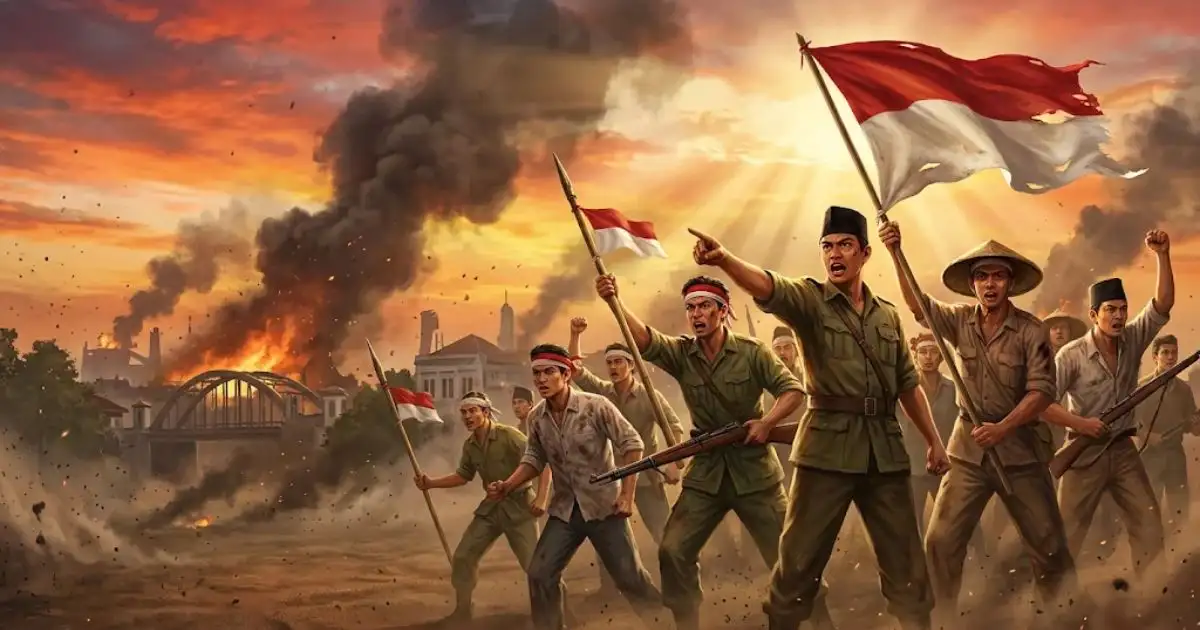
National Heroes Day, commemorated every November 10, is a vital moment for the entire Indonesian nation to remember the struggle and sacrifice of the heroes who defended our independence. The events of November 10, 1945, in Surabaya teach us that independence was not obtained for free, but through courage, unity, sacrifice, and love for the homeland. However, in the context of Indonesia today, the spirit of heroism is not enough to merely be remembered as a part of history. We need a fighting spirit realized through concrete actions in facing various national challenges, such as declining social empathy, intolerance, the spread of hoaxes, corruption, a crisis of role models, as well as various moral and social issues. Therefore, Heroes Day must be an opportunity to build awareness that every citizen has a responsibility to maintain the integrity of the nation and realize a better Indonesia.
Courage to Fight for Truth and Justice
One of the core values inherited from our heroes is the courage to fight for truth and justice. Courage is not merely the ability to face threats, but also the resolve to uphold moral principles when confronted with pressure and personal interests. This value aligns with the second principle of Pancasila, Just and Civilized Humanity, as well as the rule of law that places every citizen on an equal footing before the law. In the Christian faith, the courage to fight for the truth is part of the calling to live in honesty and justice as written in Micah 6:8—to act justly, to love mercy, and to walk humbly with God. In Indonesian life today, this value needs to be realized through the courage to reject corruption, dishonesty, discrimination, abuse of power, and all forms of actions that harm others. Being a hero means daring to do what is right, even when it is not always an easy choice.
Possessing an Unyielding Spirit and a Strong Work Ethic
Our heroes set an example that struggle requires perseverance, discipline, sacrifice, and an unyielding spirit. This value is highly relevant to Indonesia's challenges in facing the rapid development of science, technology, global competition, and social change. The younger generation must not be a generation that gives up easily, but must possess resilience, critical thinking skills, creativity, and a willingness to keep learning. From the perspective of character education, perseverance and responsibility are essential foundations in shaping quality human resources. This value also aligns with Christian teachings in Galatians 6:9, which reminds us not to grow weary in doing good and not to lose heart. Meanwhile, the fifth principle of Pancasila teaches the importance of realizing social justice for all Indonesian people. Therefore, teachers must strive through dedication and educational quality, students through earnest study and achievement, and society through beneficial work and creations. Today's struggle is no longer waged solely on the battlefield, but also in classrooms, workplaces, communities, and various spheres of life.
Maintaining Unity and Appreciating Diversity
Indonesian independence is the result of a collective struggle across various ethnicities, religions, cultures, and groups. No single group can claim the struggle for independence as its own. It is this spirit of togetherness that remains the strength of the Indonesian nation to this day. The third principle of Pancasila, the Unity of Indonesia, emphasizes that diversity must be a strength to build the nation, not an excuse to create division. In the context of Indonesia today, challenges to unity are increasingly evident through hate speech, intolerance, identity politics, discrimination, and the spread of divisive information, particularly through digital media. As Christians, we are called to be peacemakers as taught in Matthew 5:9, "Blessed are the peacemakers, for they will be called children of God." The values of love, respect for human dignity, and care for others must be realized in community life. Respecting religious freedom, obeying legal norms, maintaining harmony, and respecting the rights of others are tangible forms of the heroic spirit in national and state life.
Willingness to Sacrifice and Prioritizing the Common Good
The history of our nation's struggle shows that heroes were willing to sacrifice personal interests for independence and the future of succeeding generations. The spirit of self-sacrifice is a noble value that needs to be continually instilled, especially when modern life is increasingly influenced by individualism, materialism, and self-interest. In Pancasila, this value is reflected in the spirit of mutual cooperation (gotong royong), deliberation, and social justice. In the Christian faith, sacrifice is a tangible manifestation of love for others. Jesus Christ set an example of love that is not merely spoken, but realized through service and sacrifice (John 15:13). This value should encourage everyone to have social empathy, help those in need, respect the rights of others, and take part in solving community problems. For leaders, sacrifice is realized through sincere service; for teachers, through dedication in educating; for youth, through involvement in positive activities; and for every citizen, through responsible contribution. A strong nation is built not by people who only want to be served, but by a society willing to serve one another.
Becoming a Generation that Makes a Positive Impact
True heroes are remembered not only for their courage in the past, but also for the values and influence of their struggle passed down to the next generation. Therefore, today's Indonesian generation must understand that being a hero does not always mean doing something grand or extraordinary. Being a hero can start in everyday life: speaking honestly, obeying rules, being responsible, respecting others, using social media wisely, protecting the environment, and contributing to society. This aligns with the first principle of Pancasila regarding Belief in the One and Only God, which serves as the moral foundation of national life, as well as the values within religious, moral, decency, and legal norms that govern Indonesian society. In the Christian faith, the calling to make a positive impact is emphasized in Matthew 5:16, that every believer is called to be a light through good deeds so that others may glorify the Father in heaven. Young Christian generations must emerge as a generation possessing not only knowledge, but also character, integrity, care, and national responsibility. Thus, faith does not stop at profession, but is present through concrete actions that bring goodness to the church, society, and the nation.
Commemorating National Heroes Day 2026 means renewing our commitment to continue the struggle through our respective fields and responsibilities. Indonesia needs a generation that dares to defend the truth, never gives up, maintains unity, is willing to sacrifice, and possesses integrity in life. As Christians and Indonesian citizens, we have a moral and spiritual responsibility to bring love, justice, peace, and care into the midst of society. Let us not only be a generation proud to remember the services of our heroes, but also a generation capable of carrying on the values of their struggle through work, service, education, and devotion. For the future of the nation is determined not only by what the heroes fought for in the past, but also by what we dare to do in the present.
HAPPY NATIONAL HEROES DAY NOVEMBER 10, 2026
CENTRAL BOARD OF THE GKRI SYNOD
Rev. Yulianus Zega, M.Pd., Gr.
(Head of Youth and Teenagers Department)

Tags
Discussion
Comments